


Research
Microfluidics for Biomedicine

The primary objective of this lab is to advance the understanding of microscale fluid flow, with the goal of developing integrated micro/nanosystems for applications in biology and medicine. Research here spans a broad range of disciplines, attracting students and researchers from diverse backgrounds. For further information, please reach out to Professor Chung.
Main research Topics
1. Gene Editing and Cancer Immunotherapy via Intracellular Delivery: |
|
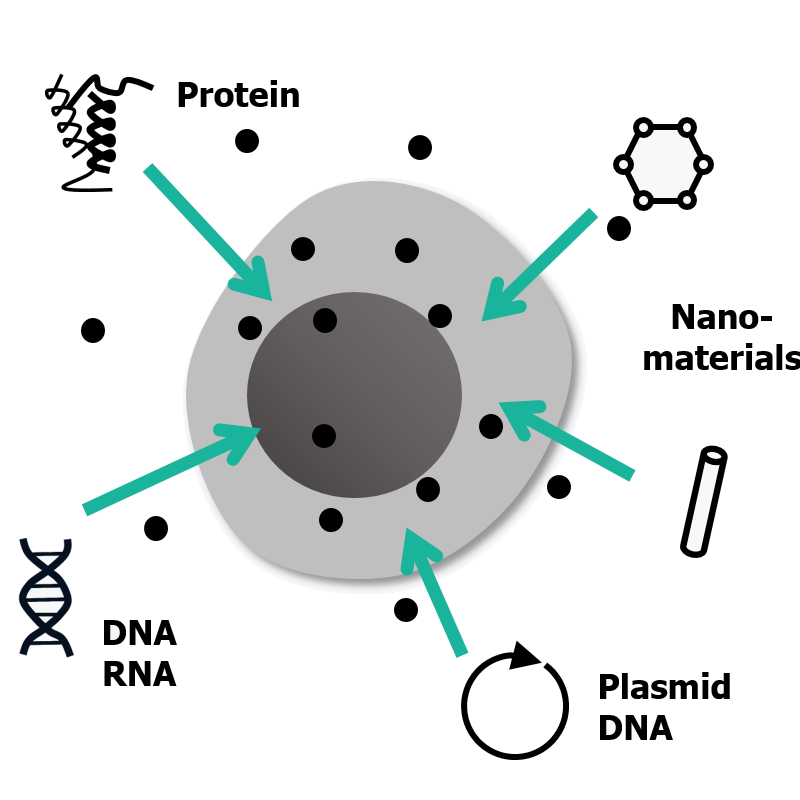 |
TThe successful introduction of biomolecules and nanomaterials into cells plays a crucial role in various fields, spanning from fundamental biology to clinical applications. At our lab, our primary goal is to pioneer innovative microfluidics-based intracellular delivery platforms designed to effectively deliver a wide range of nanomaterials into primary cells that are typically challenging to transfect, all without the need for carriers or external apparatus. Building on these platforms, we are advancing cancer immunotherapy, regenerative medicine, and genome editing, including the development of non-viral transfection technologies for cell-based immunotherapies and cutting-edge microfluidic strategies for next-generation genome editing techniques such as base and prime editing. |
2. Microfluidics for LNP Production and Screening: |
|
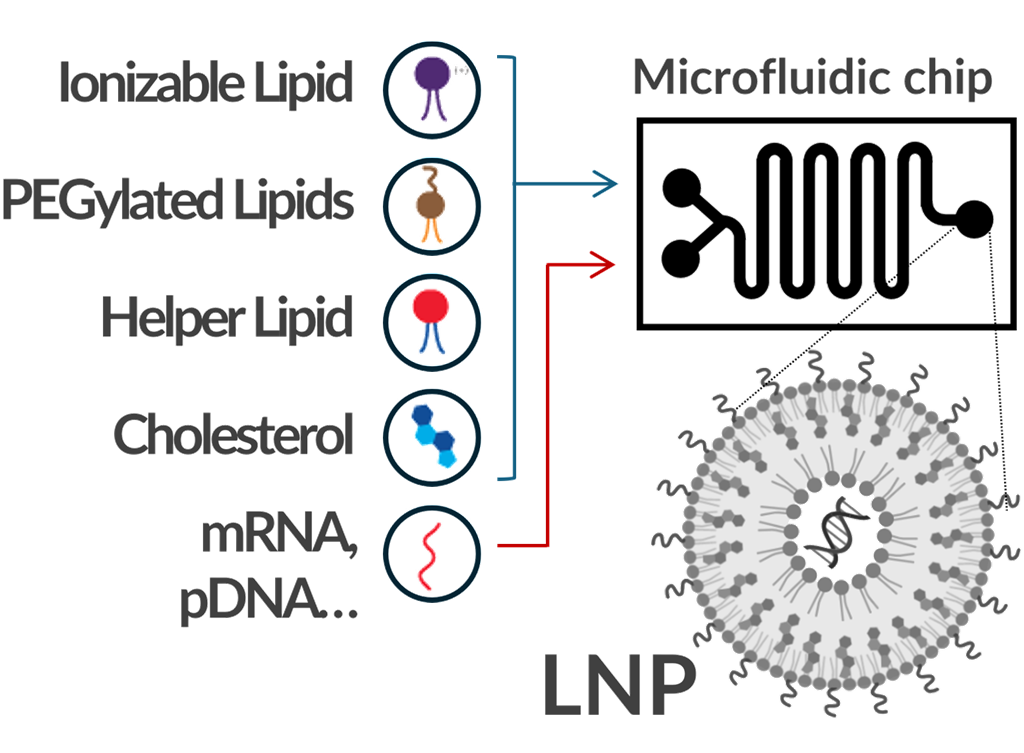 |
Lipid nanoparticles (LNPs) have gained prominence in the pharmaceutical industry as promising non-viral delivery vehicles, offering a safe and efficient method for mRNA delivery. Achieving higher delivery efficiency and targeting specificity requires optimizing the ratios of ionizable lipids, helper lipids, cholesterol, and PEG-lipids to enhance delivery efficiency. This optimization process must also be tailored to the specific cell type, cargo, and intended application, yet such efforts are often extremely time-consuming and labor-intensive. To overcome these challenges, we are developing microfluidic platforms that enable the rapid and cost-effective production and screening of LNP formulations.
. |
3. Mechanical Reactivation and Rejuvenation of Aged Cells: |
|
 |
Aging drives a progressive decline in cellular function, marked by increased oxidative stress, genomic instability, and loss of regenerative capacity, posing fundamental challenges to both basic biology and therapeutic applications. Our lab explores a bold question: can physical force alone reverse this decline? We believe it can. We are developing microfluidics-based platforms that apply precisely controlled mechanical stimuli to aged and senescent cells, triggering structural and molecular remodeling without the need for genetic modification or chemical intervention.
|